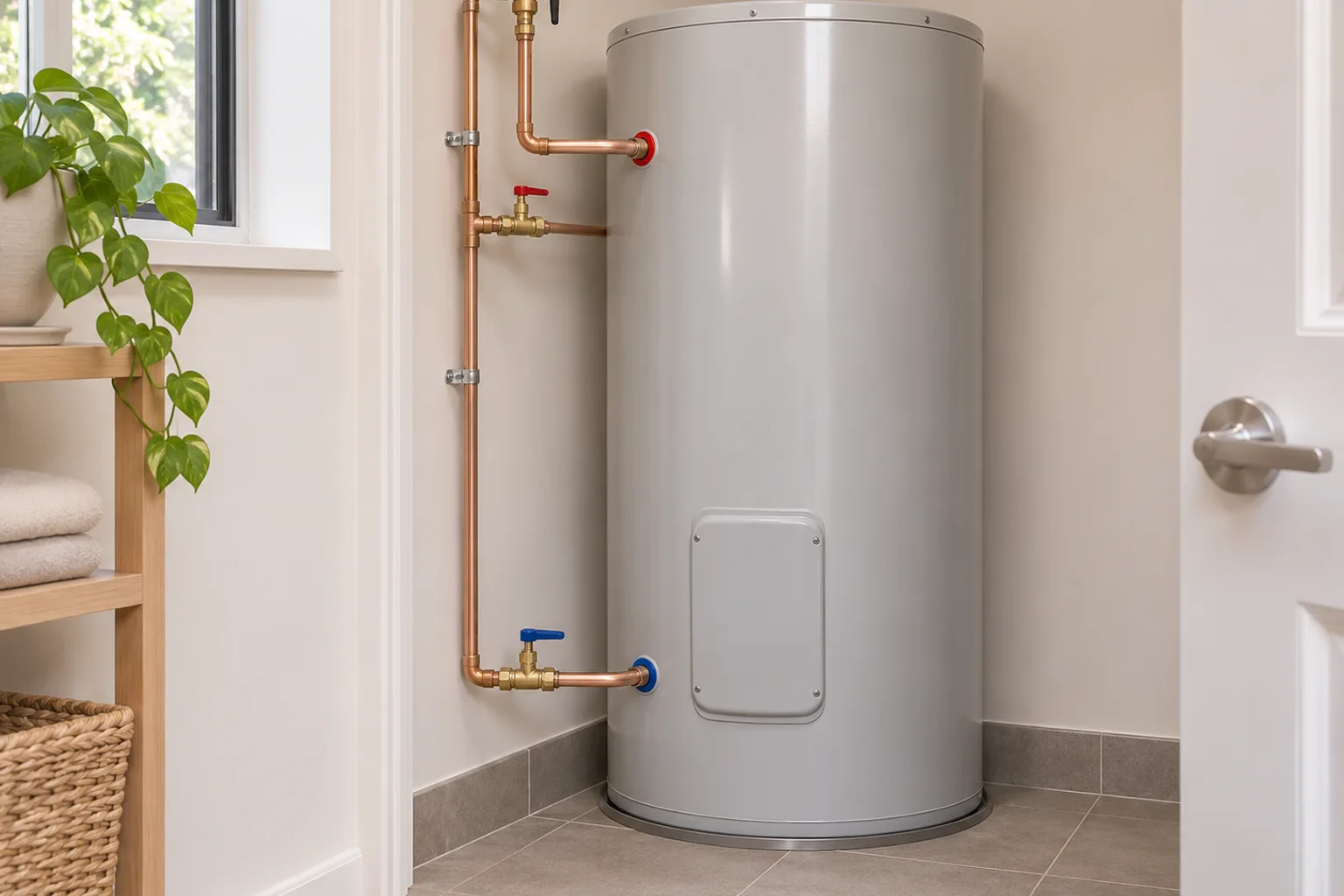
What problem are we solving?
Start with the change you want to address. Is there a new failure, an inconsistent temperature, or a long-standing problem during busy periods? Explain whether it affects the whole home or a particular fixture. This helps separate an equipment question from a symptom that may need a different assessment.
What do we know about the existing unit?
If the equipment label is accessible, note the brand and model or take a photo. The approximate age and any past service records can add context. You do not need to open covers, inspect internal parts, or touch electrical or fuel connections to have an informed first conversation.
What would the installation involve?
Ask what has to be confirmed about the existing setup, space, access, and connections. If you are considering a different type of equipment, ask which compatibility and installation questions must be answered first. A unit that physically fits may still have other requirements.
What are the options, and what does each address?
Ask for a clear explanation of the proposed repair or replacement, the work included, and any decisions still outstanding. Discuss your household’s routines and the problem you want to avoid. Buying equipment is easier when the installation and intended outcome are understood together.
 (805) 264-3058