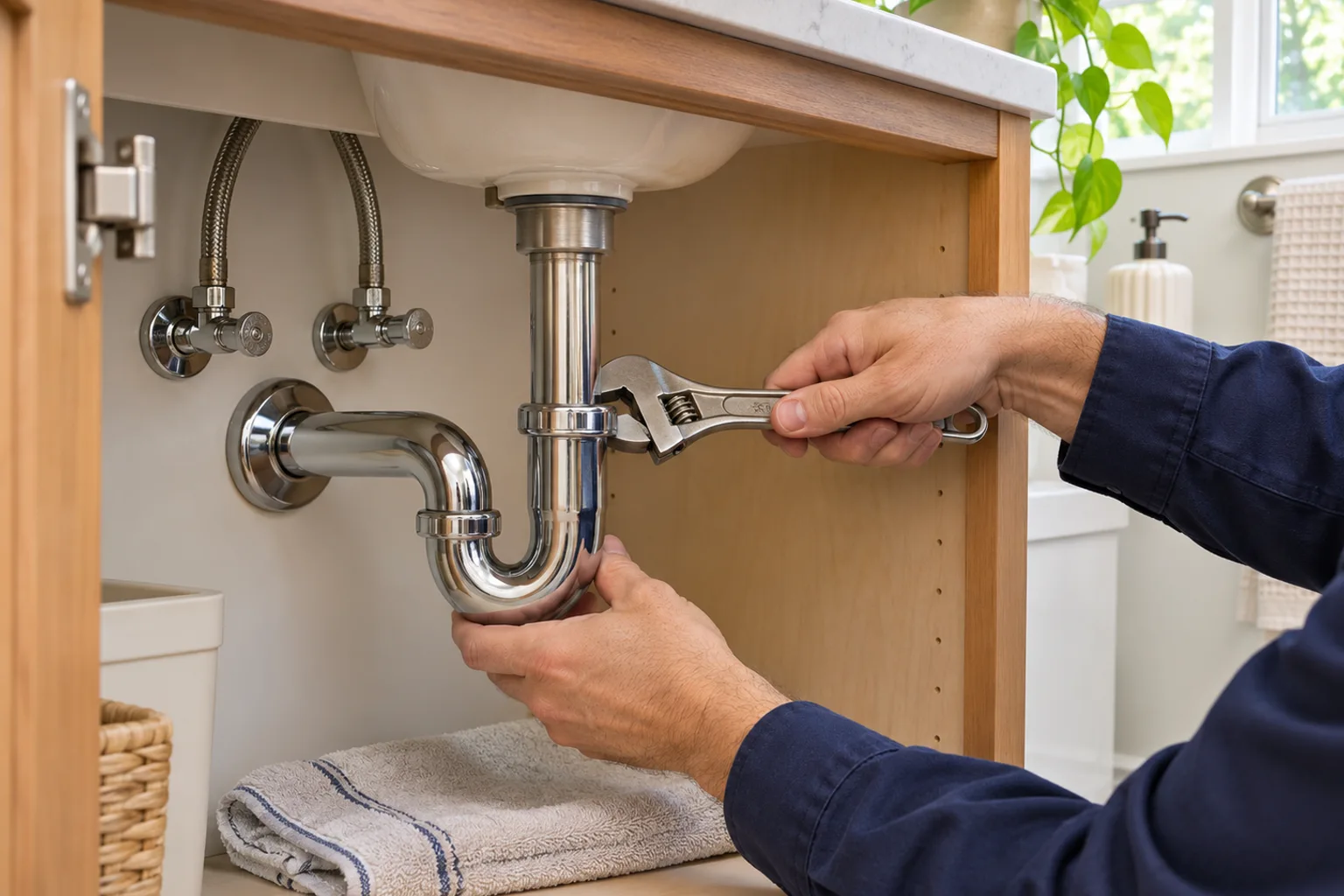
Start with where, not why.
Describe where you see water: inside a cabinet, at the base of a fixture, around an exposed connection, or somewhere else. Keep the description specific to what you can actually see. A wet area can be a clue, but it is not always the source.
Notice the timing.
Does the water appear all the time, after using the sink, or only occasionally? When did it start? Has anything recently been installed, repaired, or changed? A short timeline can be more useful than a guess about which part has failed.
Bring useful context.
A photograph of an accessible area, the fixture brand or model, and a note about any recent change in water use can help explain the concern. EPA WaterSense identifies worn toilet parts, dripping faucets, and leaking valves among common household leak sources. This is context for a discussion, not a diagnosis of your home.
Know when to call rather than send a form.
Online requests are not monitored for emergencies. If water is spreading quickly or an issue cannot wait, call to discuss availability. For an immediate hazard, contact the appropriate emergency service and stay clear of water near electrical equipment. Do not open walls or dismantle equipment simply to gather information for a call.
Further reading: EPA: checking for household leaks

 (805) 264-3058